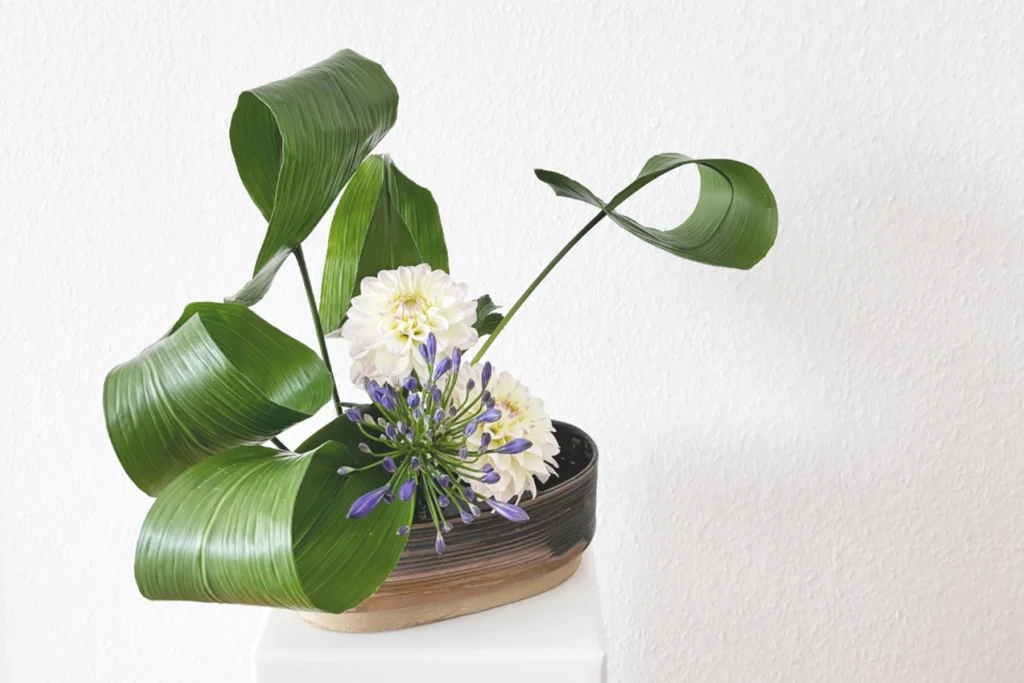
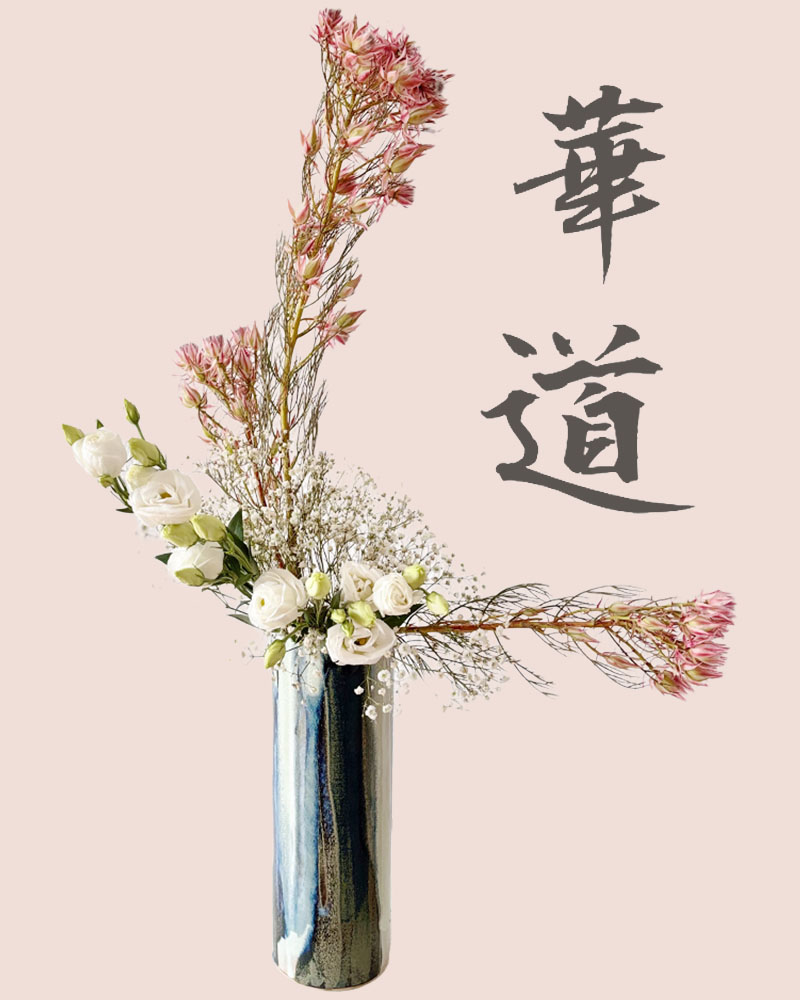
My Ikebana classes a few weeks before my summer vacation were about one theme: repeating the same shape. Around the same time, I learned of the passing of Yayoi Kusama, the queen of dot art. The coincidence made me think more deeply about her legacy, how she was perceived in Japan, and my mom, who was born about ten years after Kusama.

My mom disliked Kusama’s art so much. I think some of her dislike came from this feeling of 気持ち悪い, unsettling, eerie, maybe?
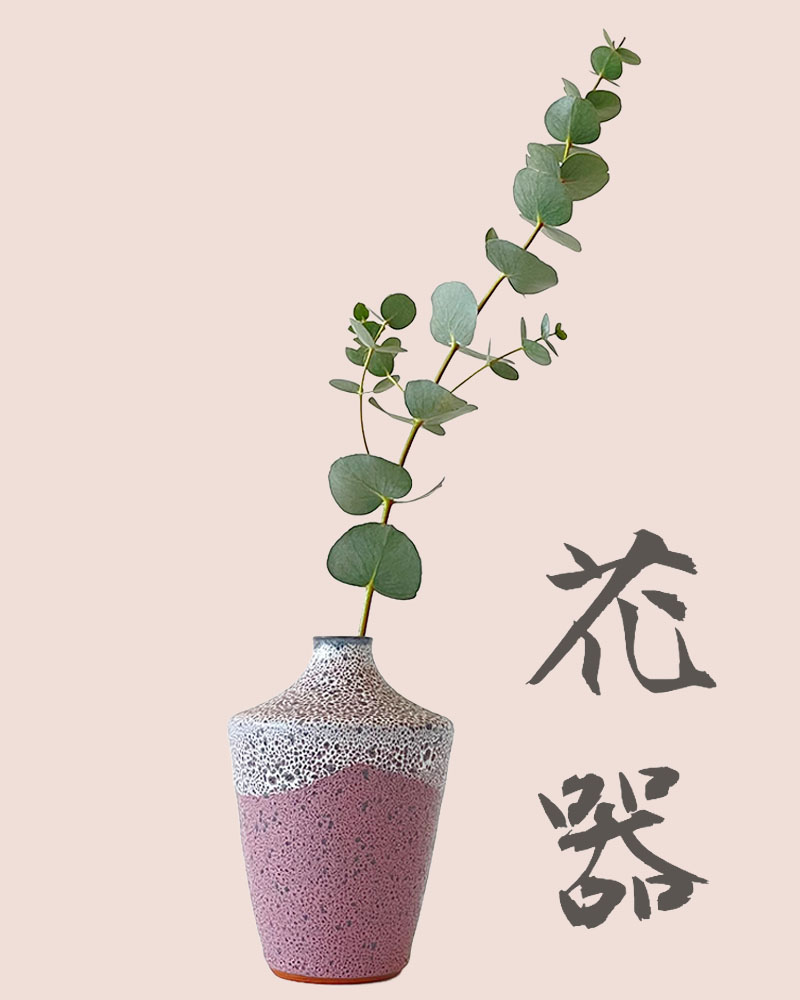
Indeed, when I went to see her show at Gropius Bau in 2021, I also had a bit of a chill down my back because of the almost obsessive repetition in her work. The same or similar shapes were repeated on such a huge scale, while my work is just on my vase, so not intense at all. It’s kinda cute, haha.
And somehow, when repetition is done on such a large scale, it seems to show both sides more intensely. Light and darkness.
Maybe my mom didn’t like her art precisely because of this eerie feeling, and perhaps also because of how Kusama was perceived at the time. Her work and performances were definitely radical. In New York in the 1960s, she staged happenings involving nudity and polka-dot-covered bodies in public spaces like Central Park. She also created her Accumulation works, stuffed fabric phallic forms, which, by the way, look nothing like the real thing to me. They’re rather cute, haha.
I can imagine that all of this must have seemed quite shocking at the time, especially coming from a Japanese woman artist. And maybe that negative image influenced the opinions of regular people like my mom. She couldn’t really explain why she disliked Kusama’s art so much, though, so this is only my guess.
My sister, on the other hand, is crazy about Kusama’s work. But she knows a very different Kusama — the internationally celebrated artist, with major exhibitions and collaborations with brands like Louis Vuitton. So perhaps she has also been influenced by the positive publicity around Kusama, just as my mom might have been influenced by the negative image of her in an earlier time.
Besides, I think it’s quite cool that Kusama became one of the relatively few Japanese women artists to reach such an extraordinary level of international recognition, along with someone like Yoko Ono.
I’m not even sure if what I feel is “pride.” Somehow saying I’m proud feels a little strange, or even a bit self-conscious, embarrassing? Mmm. I don’t really know.
I’m still processing this feeling.